
betheme/index.php
Lorem ipsum dolor sit amet, consectetur adipiscing elit. Cras id felis ac dui viverra euismod. Donec eleifend porttitor faucibus. Etiam venenatis interdum ante sit amet hendrerit. Cras eleifend, urna quis ullamcorper vehicula, ante massa sagittis mi, sed malesuada orci libero nec nibh. Mauris semper libero in augue rutrum gravida. Aenean sed egestas est, quis lobortis odio. Morbi gravida sapien vitae iaculis tincidunt. Duis maximus nisi ut erat euismod congue. Donec malesuada nulla sit amet nunc Read More...
In 1987, many areas of the monastery constructed in wood were found to be heavily infested with termites. The structures of the halls were also in a precarious position since they were on the verge of decaying. A report from the Institute of Engineers in 1989 indicated that the monastery structure faced the possibility of a collapse. In 1990, Venerable Wang Fun, temple superintendent of Chi Lin Nunnery in Hong Kong, was invited by Shuang Read More...
In 1971, the Singapore Tourism Board (STB) proceeded with the plan of the Suhang Garden, which proposed to classify Shuang Lin Monastery as a tourist attraction. This culminated in the construction of a lake, a stone bridge and a stone mountain in front of the Hall of the Celestial Kings, with the area being named as Shuang Lin Garden. It was only then that the task of building the pagoda was stopped. In early 1972, Read More...
In 1954, Master Tham Sean was appointed Superintendent of the monastery. In 1957, for the sake of commemorating the 2300th anniversary of Qu Yuan’s passing, more than 30 local poets collaborated with 2 poets from Hong Kong to hold a “poetry gathering” on the day of dragon boat festival, and to garner enough support for the establishment of a Singapore press for the benefit of general public. To celebrate the monastery’s 60th anniversary, Master Gao Read More...
For two decades since its initial construction, the monastery’s halls had become so much out of repair, with termite infested pillars and damaged walls. In 1918, Master Pu Ling initiated a restoration work. The project eventually materialized in March, and took one and a half year to complete with the help of Low Kim Pong’s son, Mr. Low Kim Seong and many devotees of the monastery. To mark the completion of this restoration, two stone Read More...
In 1898, Master Xian Hui and others stopped by Xingzhou (now Singapore) on their return journey to China from Burma, and he accepted the invitation from Low Kim Pong to build the monastery on 38 acres of land donated by him. The Dharma hall located at the backyard was the first hall to be constructed. The Zhu Lin Temple was added for the stay of his mother, sister and cousin who were named Venerable Ci Read More...
The Kunju Opera Grievance from a Former Birth was written, in collaboration with the Zhejiang Kunju Opera Troupe, at the Chi Lin Nunnery in Hong Kong in order to pass on and develop Chinese culture. The opera is one of several composed on the basis of Buddhist sutras and parallel prose narrative texts. In 2012, the Chinese Zhejiang Kunju Opera Troupe performed the opera in the Chi Lin Nunnery in Hong Kong with utmost artistry, Read More...
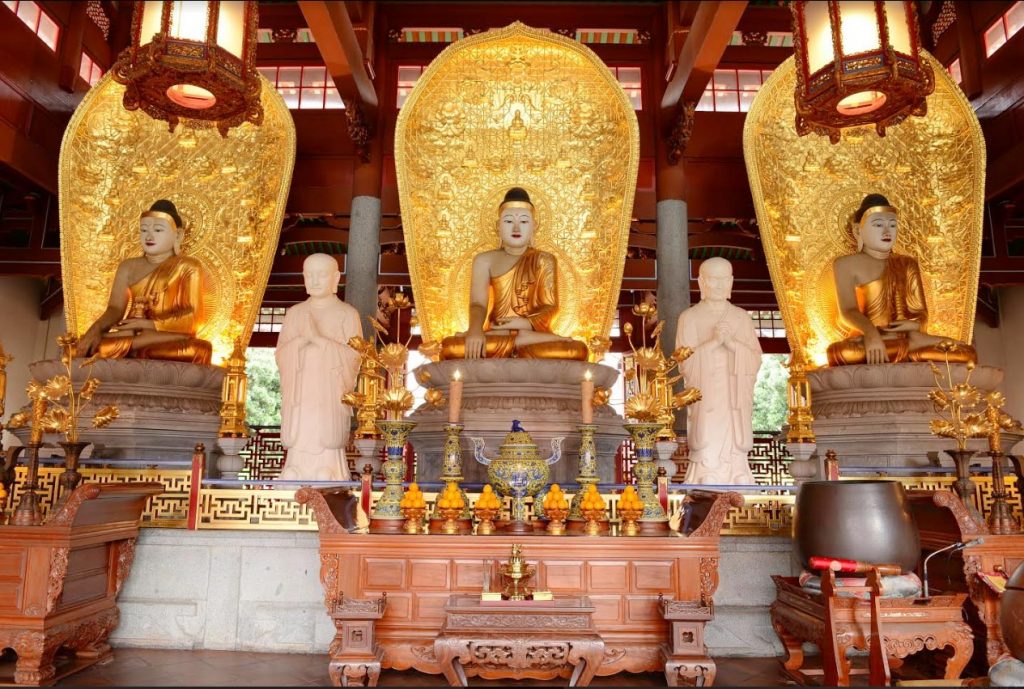
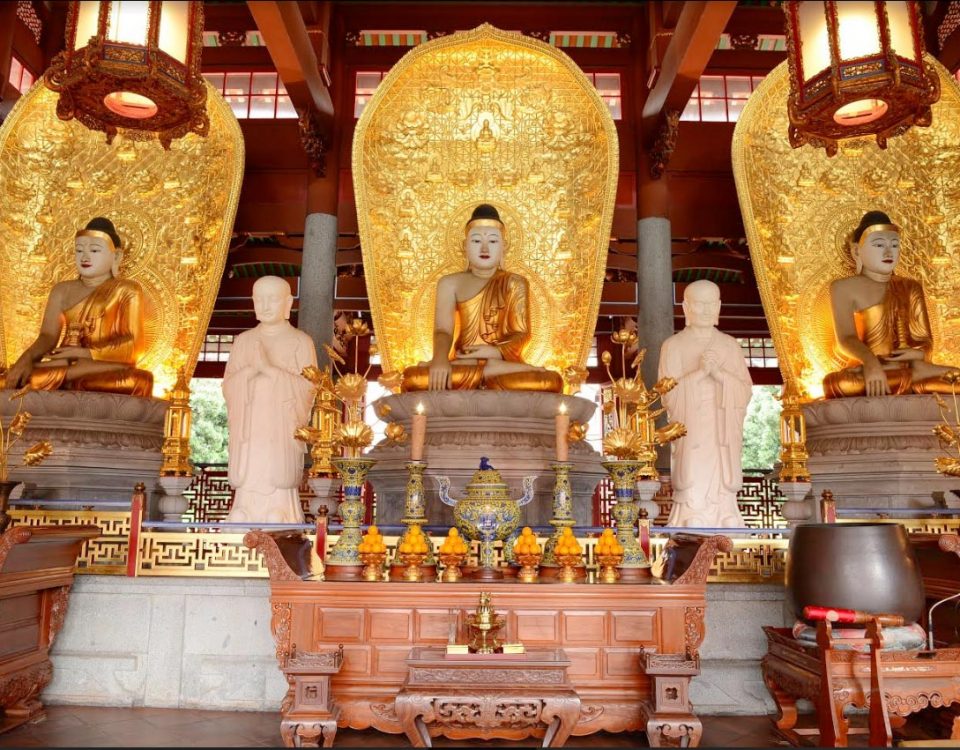
The construction of the original Mahāvira Hall began in 1904 and was completed in 1907. For more than a century, this Hall had undergone both restoration and renovation. Located along the central axis from south to north, this is the most important and most decorated hall in the monastery. Inside the Hall, there are Buddhas of the three worlds, all sitting cross-legged on the altar. In the centre enshrines the Śākyamuni Buddha, the master of this world, Read More...
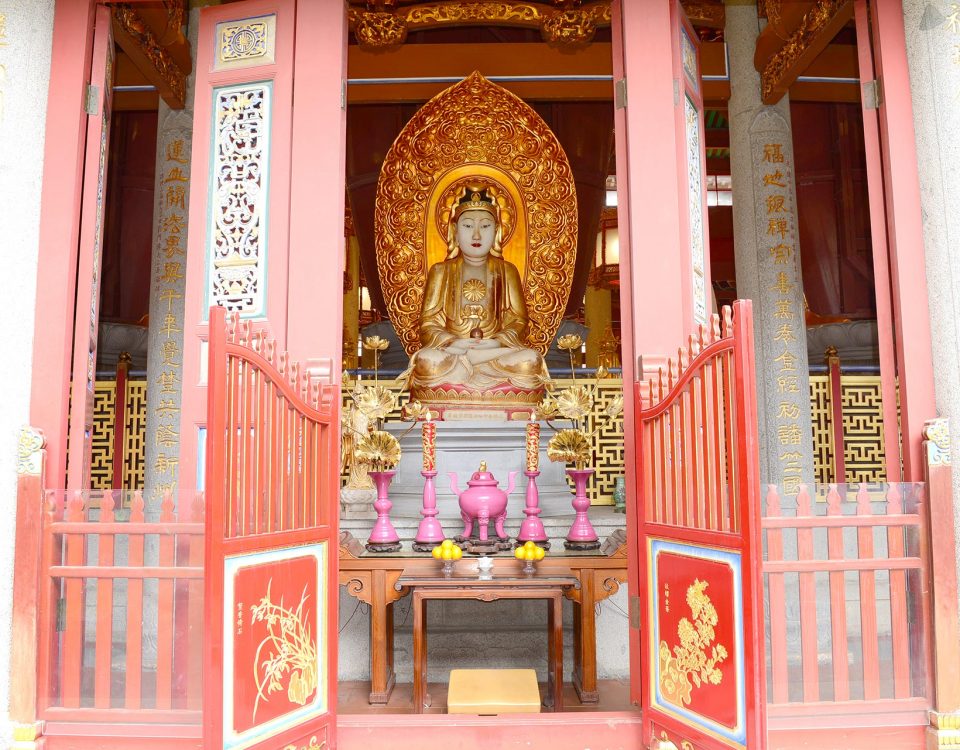
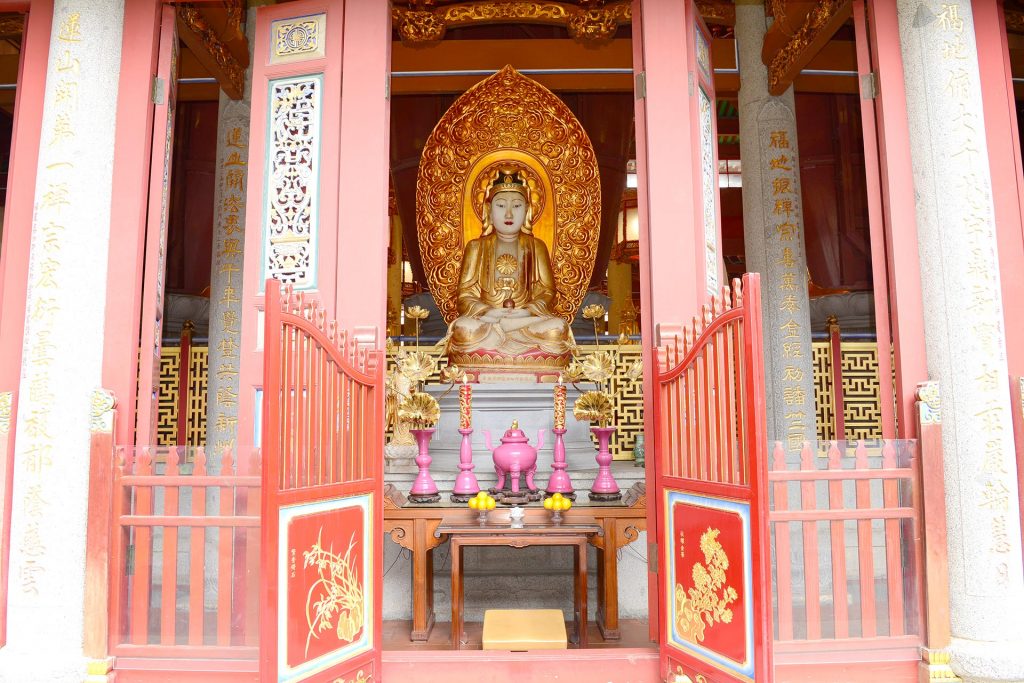
Behind the Śākyamuni Buddha enshrines a white Jade Avalokiteśvara Bodhisattva from Myanmar since 1903, facing north towards the Dharma Hall. Always ready and capable of rendering help, this goddess of mercy had become a saviour of all sentient beings in perils and distress through his various transformations and skillful means.
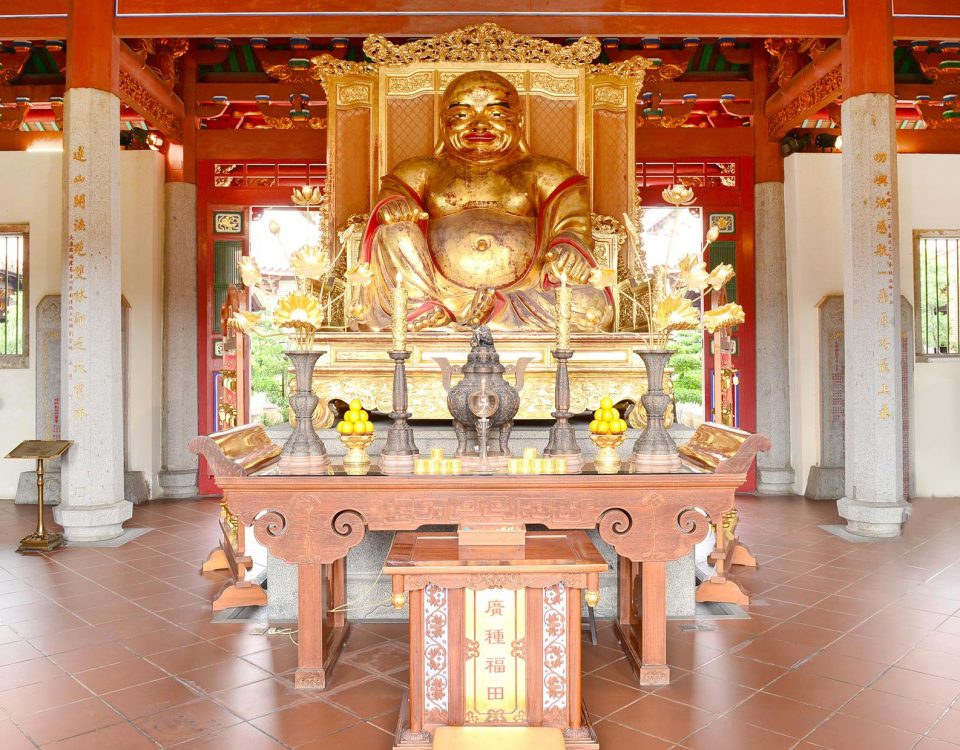
Built originally in 1905, this Hall now houses the statue of Maitreya Bodhisattva in the centre, the four Celestial kings on both sides and the Skanda Bodhisattva behind the Maitreya Bodhisattva but facing the Mahavira Hall. The Hall is grand and captivates with its high ceiling and pillars which feature intricate dragon carvings and other beautiful decorative pieces. All the beams in the hall, are constructed according to a wooden framing system most commonly found Read More...
同登华藏玄门 共入毗卢性海
莲山双林禅寺启建
报恩植福、冥阳两利华严法会
日期:农历岁次丙午
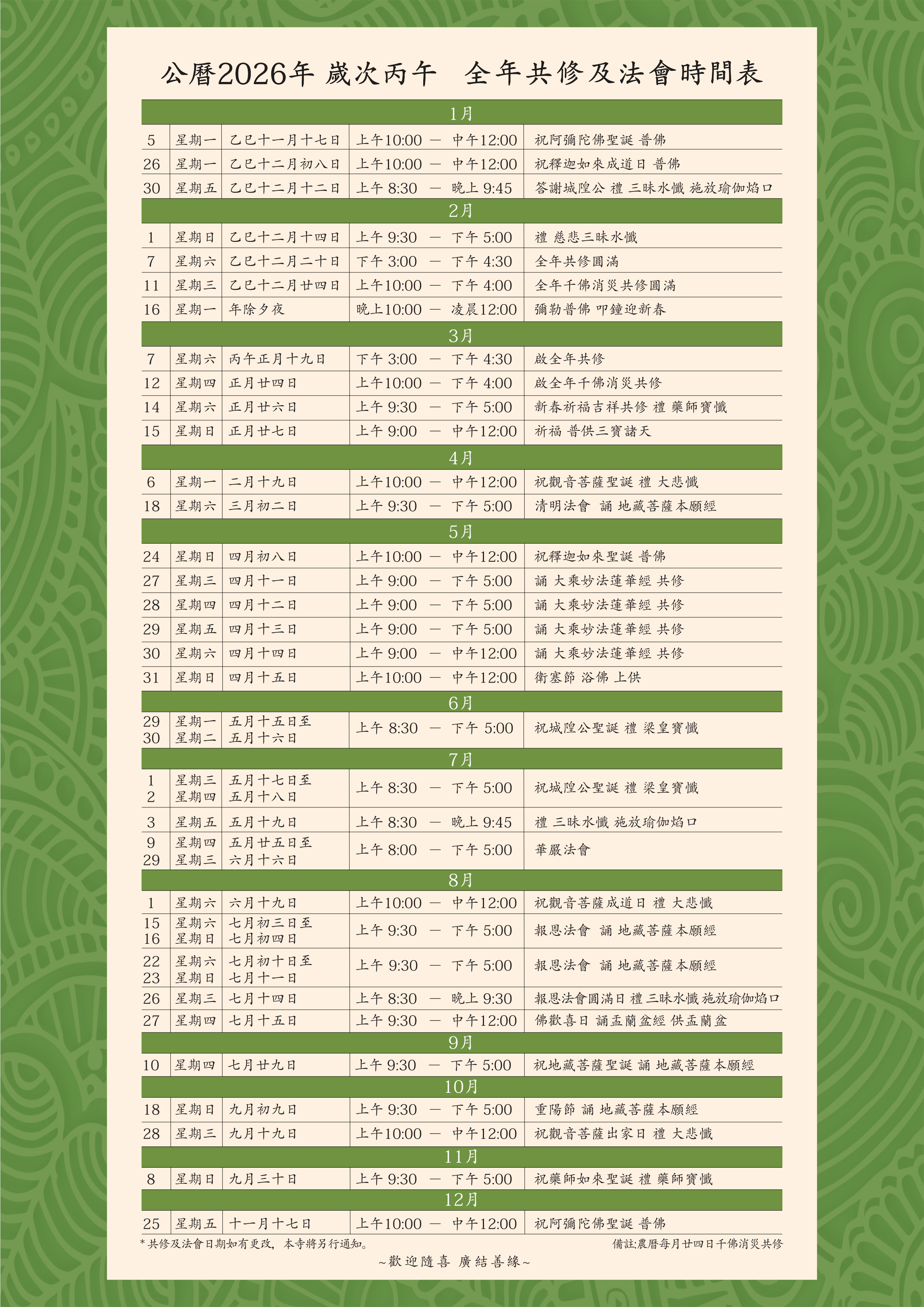
五月廿五日至六月十六日(2026年7月9日至29日)
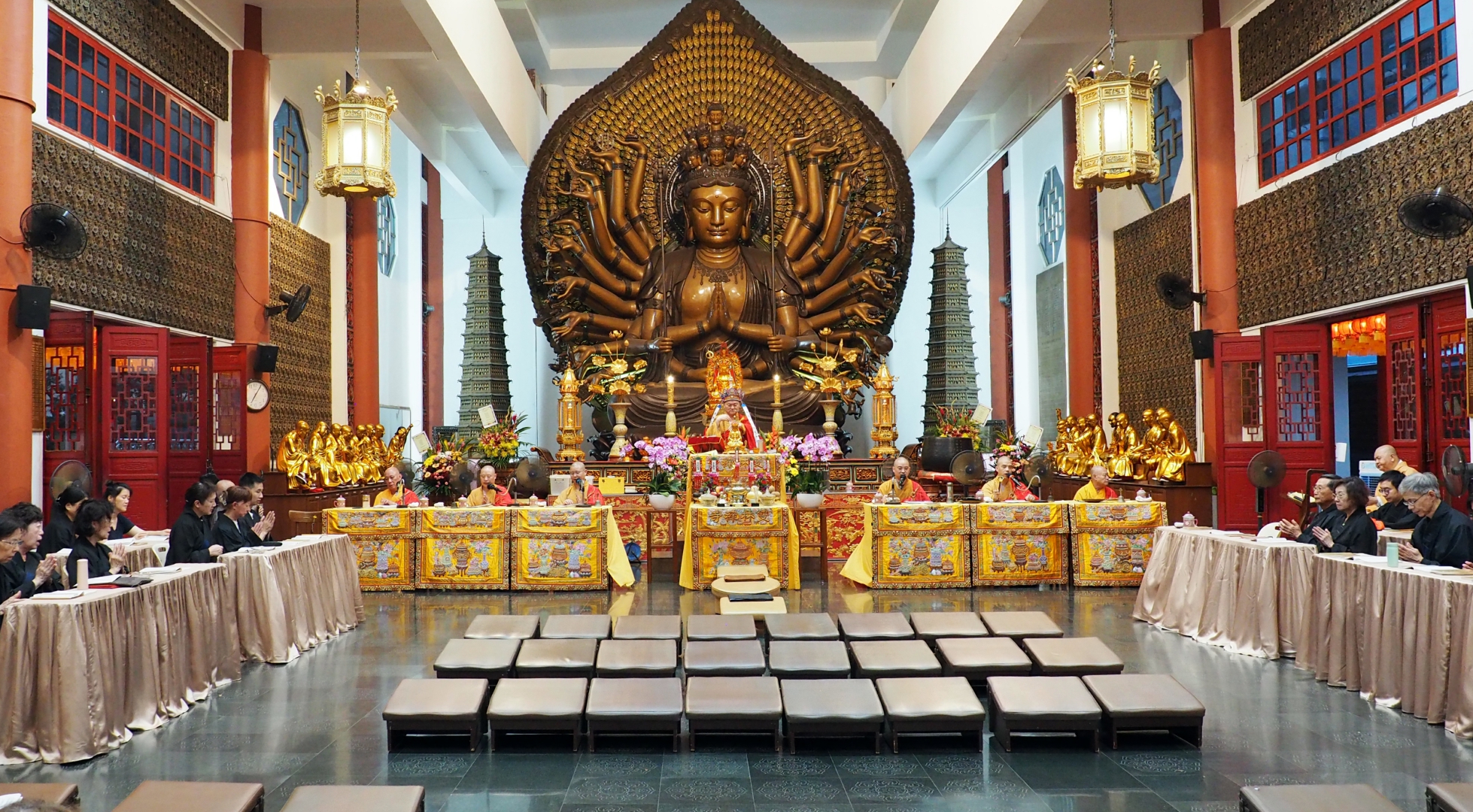
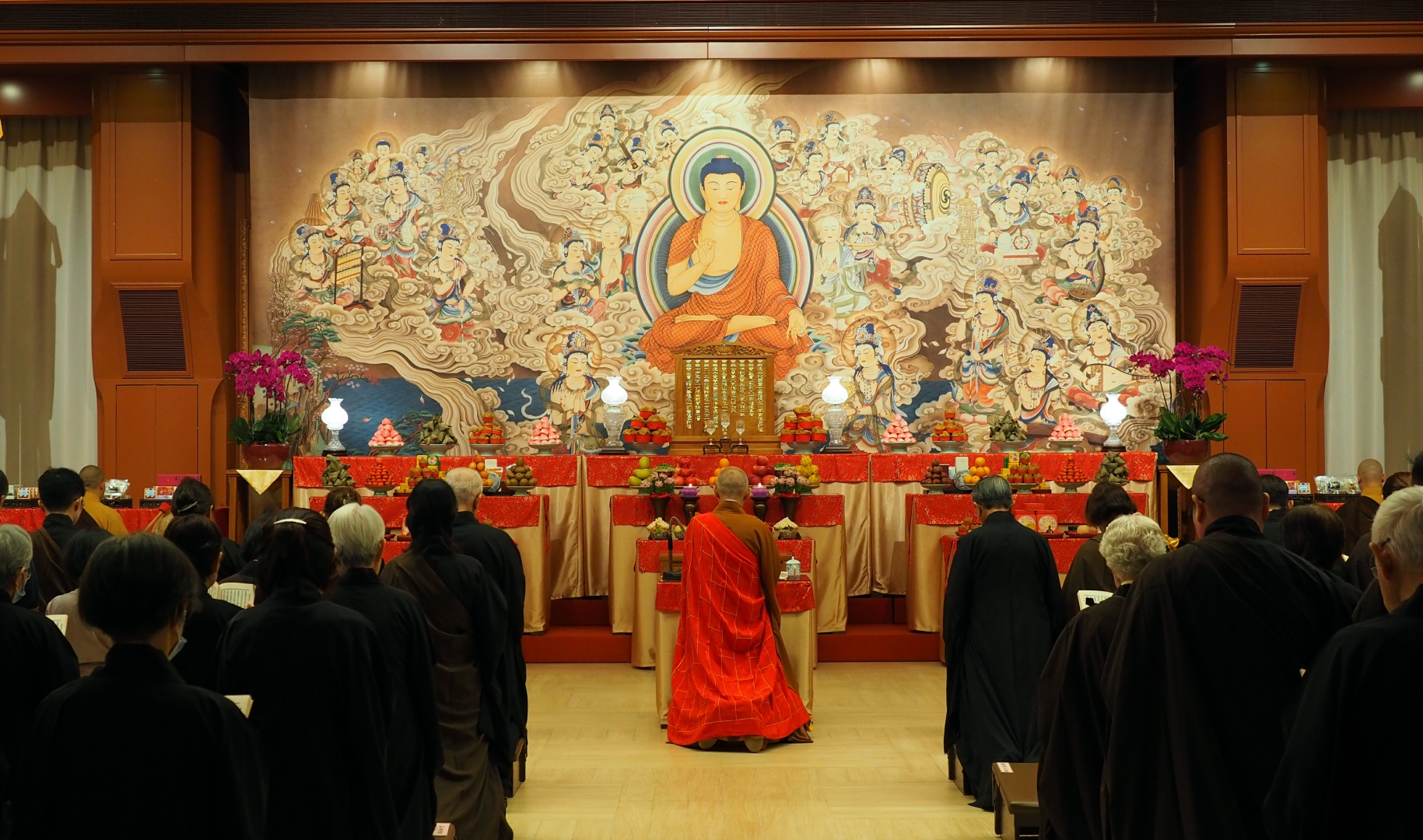
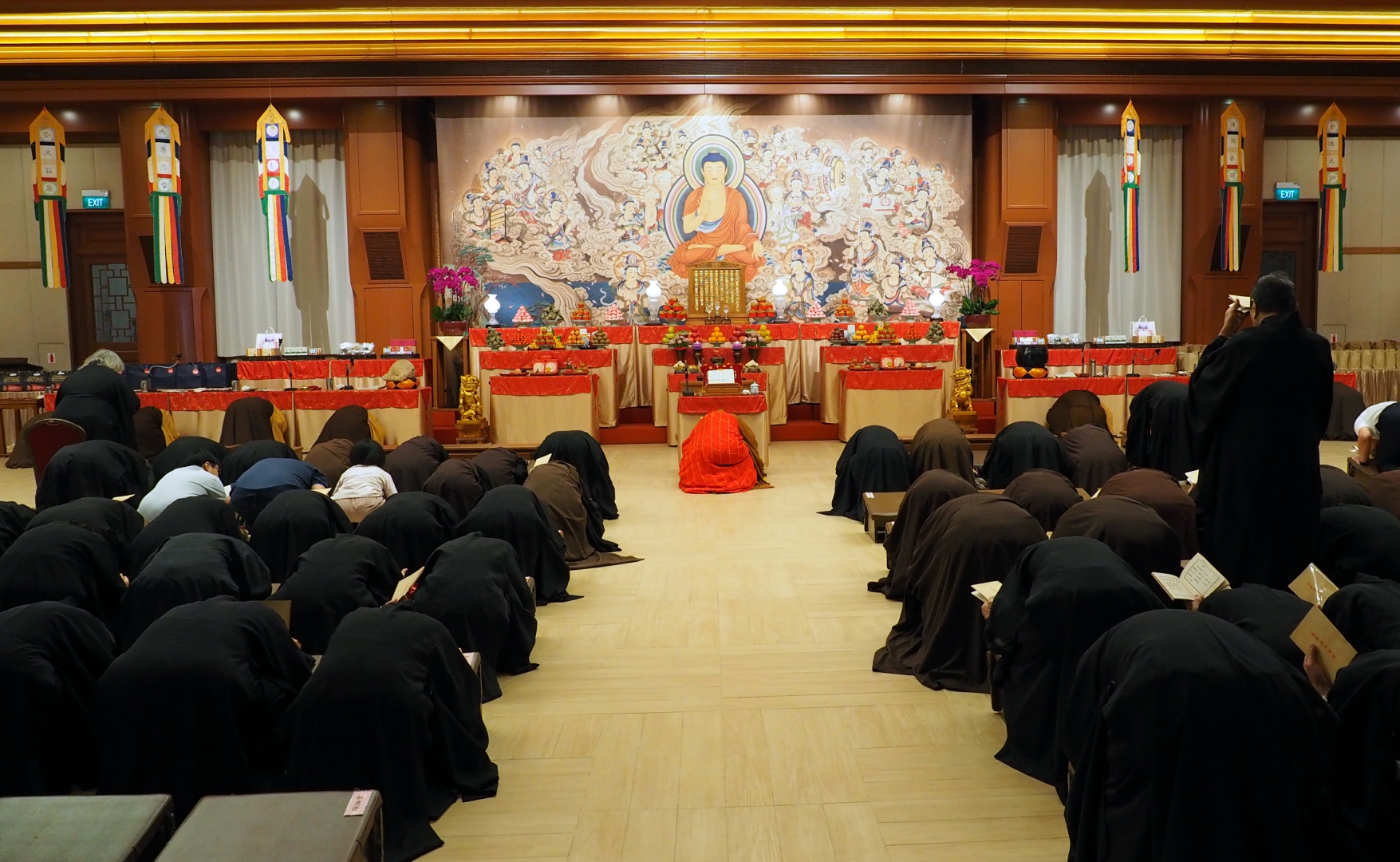
本寺谨订于2026年7月9日至7月29日(农历五月廿五日至六月十六日)启建报恩植福冥阳两利华严法会,虔诵《华严经》二十一日,以此殊胜功德,普利冥阳,虔诚祈愿:
风调雨顺,世界太平,干戈永息,安生乐命;
新加坡共和国
国运昌隆,政躬康泰,各族和融,吉祥安乐;
法界情与无情,同圆种智;
法会四众僧俗护法檀越奉以生身父母、眷属增福延寿, 先亡宗亲归棲安养。
愿十方善信共赴华严胜会,共襄盛举,同沐佛恩,共证毗卢性海!
欢迎十方护法善信随喜参加,共结胜缘,培植福慧资粮!
关于《华严经》:
《华严经》具名《大方广佛华严经》,是佛成道后在菩提场等处,藉普贤、文殊诸大菩萨显示佛陀的因行果德如杂华庄严,广大圆满、无尽无碍妙旨的大乘经典。古德云:“不读《华严》,不知佛家之富贵。”读《华严经》,谛诵《华严》的功德,则明了己心如佛心,即是“若人欲了知,三世一切佛,应观法界性,一切唯心造”,而最终证入“真法界”、“圆融无碍”的庄严境界……世界重重无尽,差别即平等,至真、至善、至美的世界。
报四恩心……佛教以大悲心普度众生离苦得乐,以般若智慧提正因,参加法会乃“悲与智”的修习。大悲心由“报四恩”培育而生。《大乘本生心地观经·报恩品》有言:“慈父恩高如山王,悲母恩深如大海;若我住世于一劫,说不能尽。以感父母恩的孝心为基礎,扩而充之,对兄弟有‘悌’,对朋友有‘义’,对众生有‘仁’,对国家有‘忠’,对师长有‘敬’,对佛陀有‘悲与智’。人人发四恩的心,便能谦恭和睦、互敬,成就真善美的人间净土。


冥阳两利 吉祥圆满
双林城隍庙
恭祝城隍公圣诞
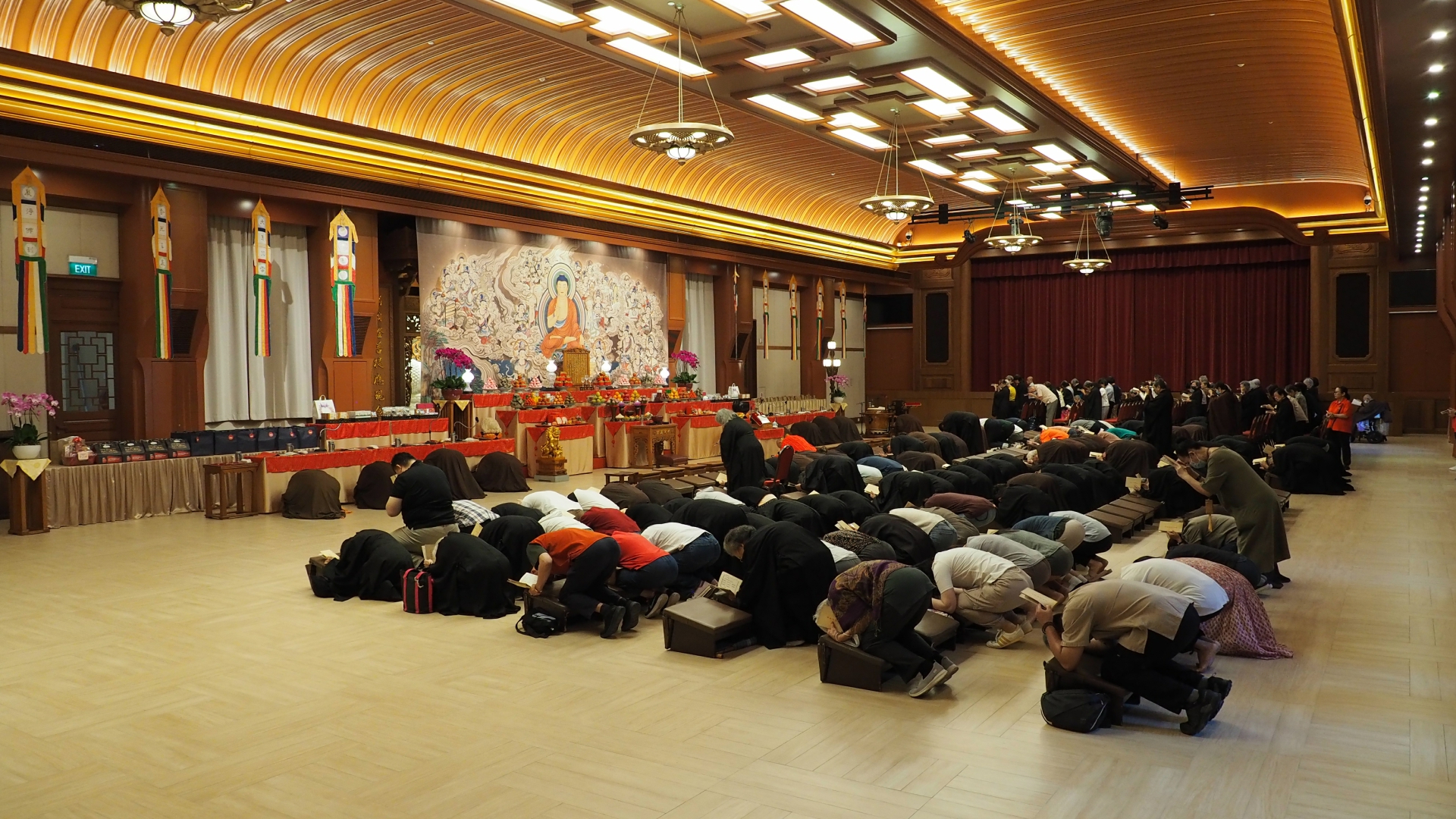
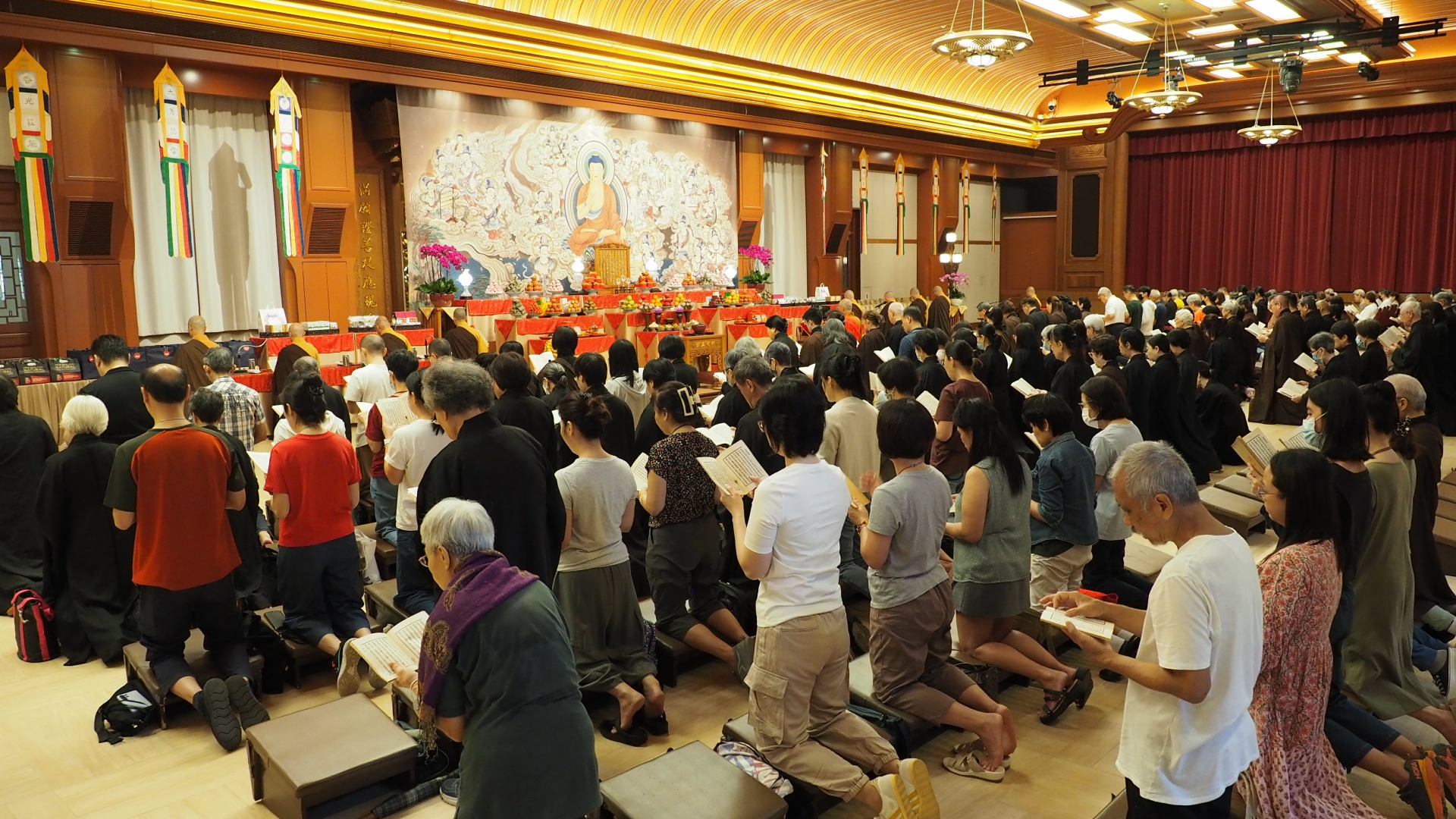
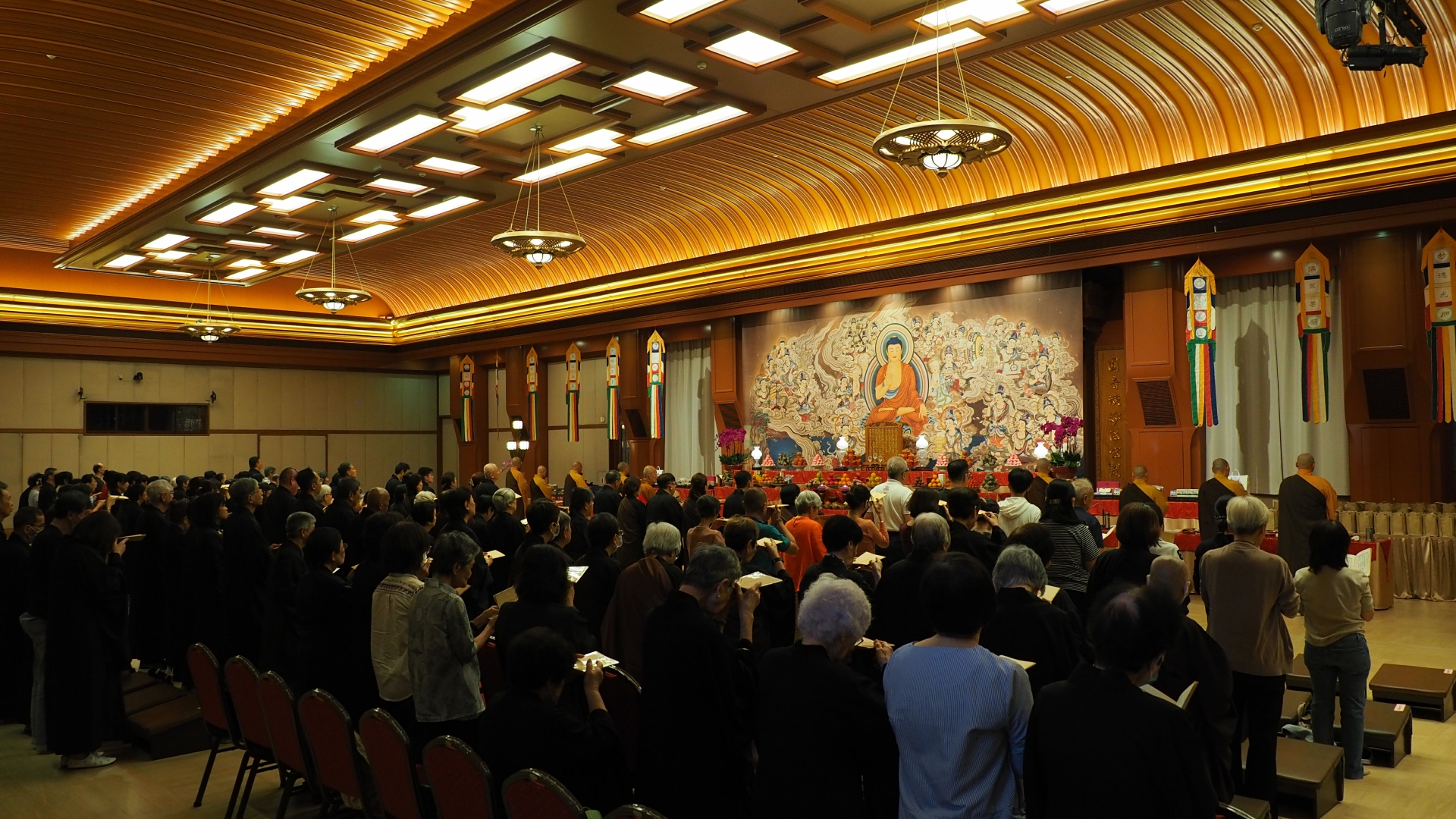
礼《梁皇宝忏》、礼《三昧水忏》暨施放瑜伽焰口
日期:农历岁次丙午五月十五日至十九日(2026年6月29日至7月3日)
欣逢农历五月十八日城隍公圣诞,双林城隍庙谨启礼《梁皇宝忏》、礼《三昧水忏》暨施放瑜伽焰口法会,以此殊胜功德,祈愿:风调雨顺、国泰民安、社会祥和、阖家安康、福慧增长。
仪程:
. 礼《梁皇宝忏》
日期:农历五月十五日至十八日(2026年6月29日至7月2日)
时间:上午8时30分至下午5时
. 礼《三昧水忏》暨施放瑜伽焰口
日期:农历五月十九日(2026年7月3日)
时间:上午8时30分至晚上9时30分
因缘殊胜,诚邀十方护法、善信随喜参与,虔诚拈香礼拜,广结善缘,共沾法益。